



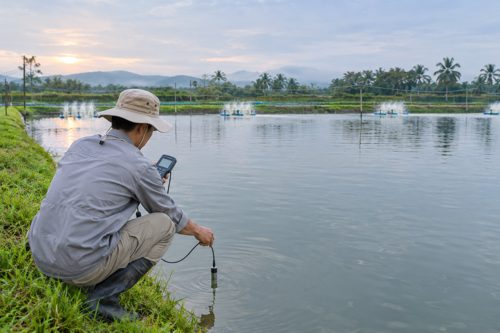
Choosing a microbial product for aquaculture takes more than comparing the species name or the highest viable-count figure on a label. Pond conditions, culture stage, product form, and the intended management purpose all affect whether a product fits a shrimp farm. Use these six checks to structure a supplier conversation before arranging a sample evaluation or field trial.
1. Confirm the intended use
State whether the product is intended for feed, pond water, or pond-bottom management. Each use can require a different formulation, storage condition, and application method. Ask the supplier to define the target setting, species, and limitations, and make sure the technical sheet matches the quotation.
2. Verify the organism and viable-count basis
Confirm the microorganism name shown on the label and technical documents. Ask whether strain identification information or a strain code is available. A viable-count claim should identify its unit, test method, test date, and whether the value applies at manufacture or at the end of shelf life. The project's aquaculture brochure lists a Bacillus subtilis powder at 100 billion CFU/g. For a purchase, verify the current specification and batch COA for the exact SKU.
3. Request batch quality documents
Ask whether a COA is available for each batch and review its test items, release limits, and retention-sample policy. Confirm that the product name, lot number, manufacturing date, viable count, storage conditions, and shelf life are consistent. For a specific species or production process, ask for application evidence relevant to that setting.
4. Check storage and shipping requirements
Aquaculture products pass through warehousing, transportation, and on-farm storage. Confirm requirements for temperature, moisture, light exposure, and handling after opening. Ask how the packaging helps reduce moisture exposure or contamination. If a supplier claims heat tolerance, long-distance stability, or performance under specific water conditions, request the test conditions and results.
5. Get practical application guidance
Application guidance should identify the method, target species, key environmental conditions, frequency, and compatibility with other inputs. Avoid setting a dose from broad promotional language alone. For an initial evaluation, have an aquaculture technician design the trial around site records and pre-agreed indicators such as water conditions, feeding, and animal status.
6. Make the trial reviewable
Record pond conditions and management practices before the trial. Keep comparison conditions as consistent as practical, and define the observation period, record owner, and decision criteria. Results from a small trial cannot be assumed to apply to every pond, especially when season, salinity, feeding, and aeration practices differ.
Information to prepare before contacting a supplier
Prepare the cultured species and stage, intended product use (water, pond bottom, or feed), target market, preferred formulation, viable-count target, pack size, storage and shipping conditions, and required quality documents. A complete brief makes supplier proposals easier to compare.
This article supports supplier evaluation and purchasing discussions. It does not provide aquaculture disease diagnosis or treatment advice. Confirm product parameters and application instructions against the approved label, current technical documents, and applicable local requirements.