


Hey there! I'm a supplier of Pediococcus Pentosaceus, and today I wanna chat about the growth curve of this amazing bacterium.
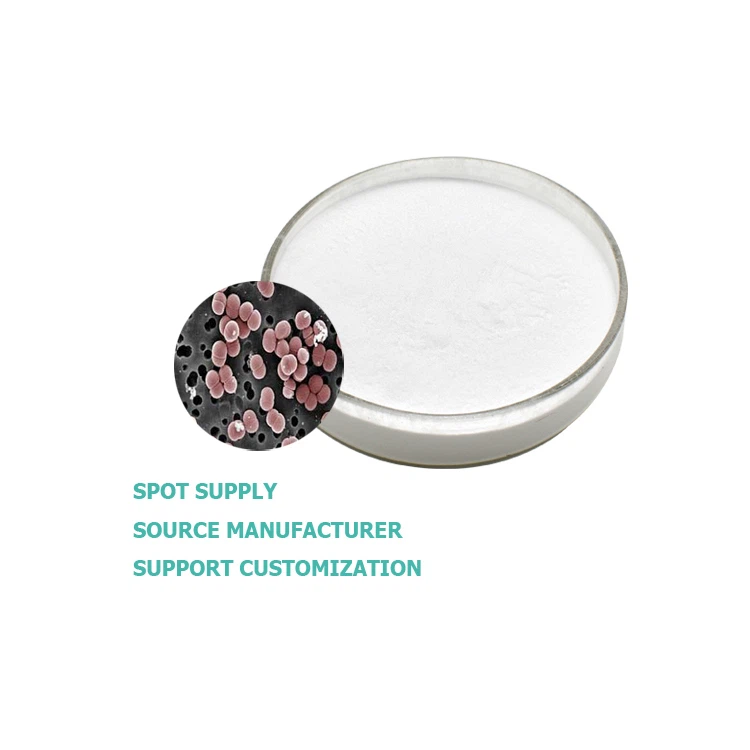
First off, let's get a basic understanding of Pediococcus Pentosaceus. It's a lactic acid bacterium that's found in a bunch of places, like fermented foods and the human gut. It's got some pretty cool health benefits, which is why it's becoming more and more popular in the probiotic industry. You can find out more about it Pediococcus Pentosaceus.
Now, onto the growth curve. The growth curve of Pediococcus Pentosaceus is a graph that shows how the number of bacteria changes over time in a given environment. It usually has four main phases: the lag phase, the exponential phase, the stationary phase, and the death phase.
The Lag Phase
The lag phase is the starting point. When you first introduce Pediococcus Pentosaceus into a new environment, it takes a little while to adjust. During this time, the bacteria are getting used to the new conditions, like the temperature, pH, and the available nutrients. They're also synthesizing the enzymes they need to start growing and dividing.
This phase can vary in length depending on a few factors. If the bacteria are coming from a similar environment, the lag phase might be short. But if they're being transferred to a completely different place, it could take longer. For example, if you're moving them from a lab culture to a food fermentation process, they might need some extra time to adapt.
The Exponential Phase
Once the bacteria have adjusted, they enter the exponential phase. This is when things get really exciting! In this phase, the bacteria start dividing at a constant rate. Each cell splits into two, and those two split into four, and so on. The number of bacteria increases exponentially, hence the name.
The exponential phase is super important for us suppliers. It's when we can produce a large number of Pediococcus Pentosaceus in a relatively short time. We can control the conditions during this phase to make sure the bacteria grow as fast as possible. Things like maintaining the right temperature, providing enough nutrients, and keeping the pH stable are crucial.
During this phase, the bacteria are also very active metabolically. They're producing lactic acid, which gives them their characteristic sour taste and also helps preserve the environment. This lactic acid production is one of the reasons why Pediococcus Pentosaceus is so useful in food fermentation.

The Stationary Phase
As the bacteria keep growing, they start to run into some problems. The nutrients in the environment start to get used up, and the waste products they produce start to build up. This leads to the stationary phase.
In the stationary phase, the number of new bacteria being produced is equal to the number of bacteria dying. So, the overall number of bacteria in the population stays relatively constant. The bacteria are still alive and active, but they're not growing as rapidly as they were in the exponential phase.
This phase can be a bit tricky for us suppliers. We need to find the right balance between keeping the bacteria alive and maintaining their quality. If we let the bacteria stay in the stationary phase for too long, they might start to lose their viability or their beneficial properties.
The Death Phase
Eventually, the conditions in the environment become so unfavorable that the bacteria start to die off. This is the death phase. The nutrients are completely depleted, and the waste products have reached toxic levels.
The death phase is something we try to avoid as much as possible. We want to harvest the Pediococcus Pentosaceus before it reaches this stage. By doing so, we can ensure that we're providing our customers with high - quality bacteria that are still alive and effective.
Factors Affecting the Growth Curve
There are several factors that can affect the growth curve of Pediococcus Pentosaceus.
Nutrients
Nutrients are essential for the growth of bacteria. Pediococcus Pentosaceus needs a source of carbon, nitrogen, vitamins, and minerals. In a fermentation process, we usually provide them with things like sugars (for carbon), amino acids (for nitrogen), and various vitamins and minerals. If the nutrients are limited, the growth of the bacteria will be affected. For example, if there's not enough sugar, the bacteria won't be able to produce enough energy to divide.
Temperature
Temperature plays a huge role. Pediococcus Pentosaceus has an optimal temperature range for growth. If the temperature is too low, the bacteria will grow very slowly or might even stop growing altogether. On the other hand, if it's too high, it can damage the bacteria and kill them. Most strains of Pediococcus Pentosaceus grow best at around 30 - 37°C (86 - 98.6°F), which is close to the human body temperature.
pH
The pH of the environment is also crucial. Pediococcus Pentosaceus prefers a slightly acidic environment. If the pH is too high or too low, it can affect the bacteria's metabolism and their ability to grow. For example, in a food fermentation process, we often adjust the pH to keep it within the optimal range for the bacteria.
Oxygen
Pediococcus Pentosaceus is a facultative anaerobe, which means it can grow with or without oxygen. However, it usually grows better in anaerobic conditions. In the presence of oxygen, it might produce different metabolites, and its growth rate could be affected.
Comparing with Other Bacteria
It's interesting to compare the growth curve of Pediococcus Pentosaceus with other lactic acid bacteria, like Pediococcus Acidilactici and Streptococcus Thermophilus.
Pediococcus Acidilactici has a similar growth pattern, but it might have different optimal conditions for growth. For example, it might be more tolerant to certain environmental stresses, like high salt concentrations.
Streptococcus Thermophilus, on the other hand, is known for its ability to grow at higher temperatures. It's often used in yogurt production because it can thrive in the warm conditions of the fermentation process. While Pediococcus Pentosaceus can also grow at relatively high temperatures, Streptococcus Thermophilus has a higher optimal growth temperature.
Why It Matters for You
If you're in the business of using Pediococcus Pentosaceus, understanding its growth curve is super important. It can help you optimize your production processes, whether you're making probiotic supplements or fermented foods.
For probiotic manufacturers, knowing when to harvest the bacteria during the exponential or stationary phase can ensure that you're getting the highest number of viable cells. This means you can produce a more effective product for your customers.
In the food industry, understanding the growth curve can help you control the fermentation process. You can time it just right to get the desired flavor, texture, and shelf - life of your products.
Contact Us for Procurement
If you're interested in purchasing Pediococcus Pentosaceus, we're here to help. We've got a great supply of high - quality Pediococcus Pentosaceus that's been carefully cultivated and tested. We can work with you to understand your specific needs and provide the right product for your application. Whether you're a small - scale food producer or a large probiotic company, we're ready to partner with you. So, don't hesitate to reach out and start a conversation about procurement.
References
- Salminen, S., & von Wright, A. (1998). Lactic acid bacteria. Marcel Dekker.
- Holzapfel, W. H., Haberer, P., Geisen, R., Björkroth, J., & Schillinger, U. (2001). Overview of gut flora and probiotics. International Journal of Food Microbiology, 67(1 - 2), 1 - 24.